What hardware support is required to implement Wi-Fi 7 MLO technology?
 Copy
Copy
To implement WiFi7 MLO - Multi-Link (Band) Collaboration technology, the following hardware support is required.
1. Multi-band transceivers:
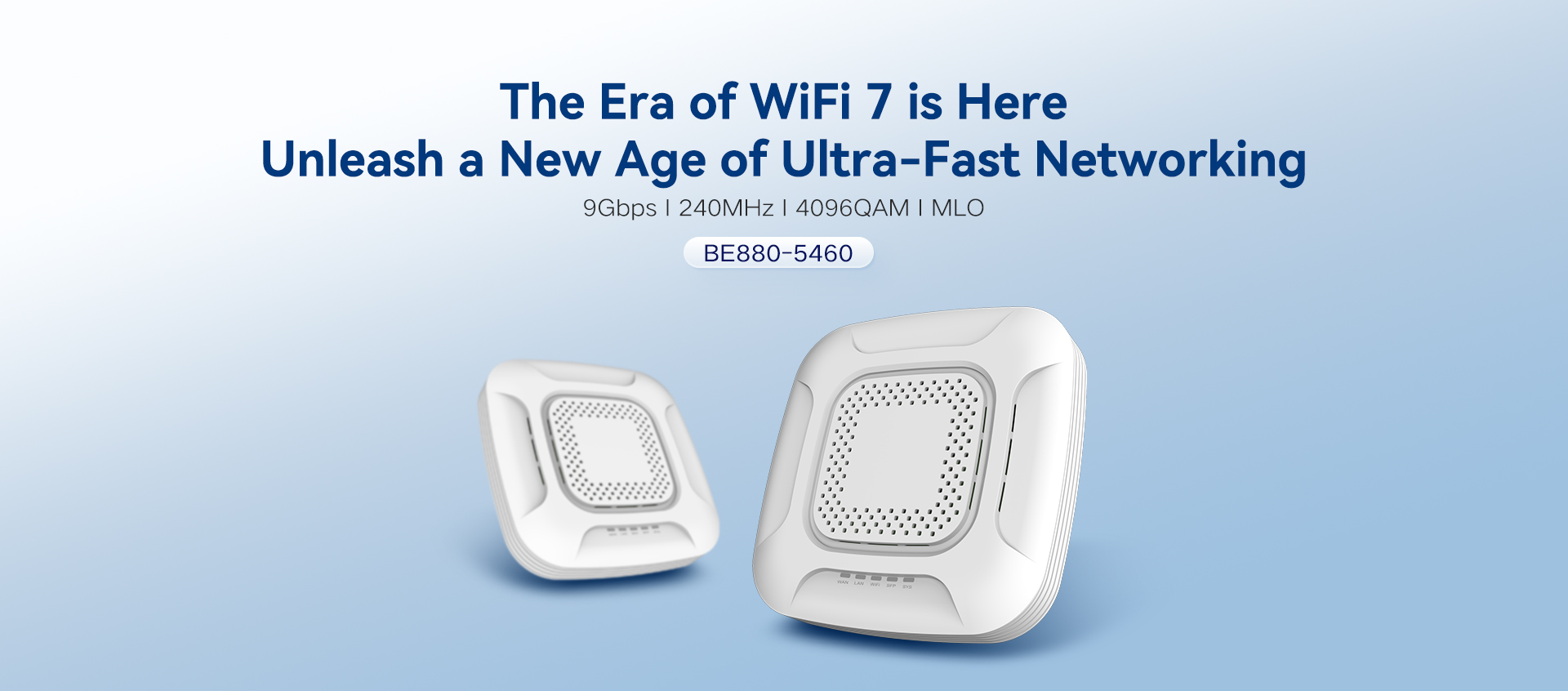
WiFi7 MLO requires the device to have the ability to operate in the 2.4GHz, 5GHz and 6GHz bands at the same time → see Wi-Fi7 Ceiling AP-BE880 for details.
This requires the integration of multiple RF transceiver circuits inside the device to support parallel operation of different frequency bands.
2. Multi-antenna design:
In order to take full advantage of MLO's multi-link aggregation, the device needs to be equipped with multiple independent antennas.
Typically 4-8 antennas are required to support simultaneous data transmission over multiple frequency bands and spatial streams.
3. High-performance processors:
MLO involves complex signal scheduling and link switching algorithms, requiring powerful processing capabilities.
The device needs to be equipped with high-performance CPU and DSP in order to process data from multiple wireless links in real time.
4. Large memory capacity:
5. High-speed interface: